




Unlocking AI: Natural Language Processing vs. Large Models
Have you ever wondered how devices like smartphones and smart speakers understand and respond to your voice commands?
This capability is powered by Natural Language Processing (NLP), a branch of artificial intelligence that equips computers with the ability to interpret, comprehend, and manipulate human language. NLP combines computational linguistics—rule-based modeling of human language—with statistical, machine learning, and deep learning models. These technologies enable computers to process human language in the form of text or voice data and to ‘understand’ its full meaning, complete with the speaker’s intent and sentiment.
The journey of NLP began in the 1950s with simple machine translation projects like the Georgetown experiment in 1954, which involved the fully automatic translation of more than sixty Russian sentences into English. Since then, Natural Language Processing has evolved significantly with the introduction of various models and algorithms that have progressively improved its capabilities.
Today, NLP is an indispensable technology in modern computing, integrated into various daily applications that assist, direct, and entertain us. From email filtering, speech recognition, and customer service chatbots, to more complex systems like predictive text and machine translation, NLP is behind many of the conveniences of contemporary digital life.
Moreover, Its ability to process and analyze vast amounts of natural language data also makes it a vital tool in gathering insights and making data-driven decisions in business, health care, and many other fields.
Fundamental Concepts of Natural Language Processing:

Natural Language Processing (NLP) is a field at the intersection of computer science, artificial intelligence, and linguistics. It involves the development of algorithms and systems that allow computers to understand, interpret, and generate human language in a way that is both meaningful and useful.
Natural Language Understanding (NLU)
NLU is a subset of Natural Language Processing that deals specifically with machine reading comprehension. This involves the complex task of determining the intended meaning behind the words and sentences that humans naturally use. NLU systems are designed to understand contexts, extract relevant facts, and determine the relationships between different concepts in a text.
Natural Language Generation (NLG)
Contrasting NLU, NLG is about generating natural language from a machine representation system such as a database or a logical form. People encounter NLG in their daily interactions with AI when they receive traffic updates, weather reports, or personalized recommendations. This process involves structuring and presenting the data in a human-like communication style.
Key Techniques in NLP
- Tokenization: This is the process of breaking down text into smaller pieces, called tokens, which may be words or phrases. It’s the first step in enabling a machine to understand text.
- Stemming: This technique reduces words to their base or root form. For instance, “running”, “runs”, and “ran” might all be reduced to “run”.
- Lemmatization: Similar to stemming, it involves using vocabulary and morphological analysis of words to remove inflectional endings only and to return the base or dictionary form of a word, which is known as the lemma.
- Part-of-Speech (POS) Tagging: This involves labeling each word in a sentence as nouns, verbs, adjectives, etc. This is crucial for many other Natural language processing applications as it helps attribute meaning to individual words and their role in sentences.
NLP Technologies & Their Applications:
Natural Language Processing (NLP) technologies are increasingly integral to various software applications, enhancing human-computer interaction. They enable machines to perform tasks such as translating languages, operating voice-activated systems, and managing customer service inquiries automatically and efficiently.
Speech Recognition & Voice-Driven Systems:
- Functionality: These systems convert spoken language into text. They are vital in creating responsive technologies like virtual assistants (e.g., Siri, Alexa) and in applications requiring hands-free operation.
- Applications: Used in customer service to handle inquiries via voice, in mobile apps for voice-based searching, and in accessibility technologies for those unable to use traditional computing interfaces.
Text Analytics & Sentiment Analysis
- Text Analytics: Involves extracting meaningful patterns and trends from text data. This includes information retrieval, lexical analysis to study word frequency distributions, pattern recognition, tagging/annotation, and natural language understanding.
- Sentiment Analysis: This technique is used to determine the emotional tone behind a series of words. Businesses must understand consumer reactions to products or services.
- Applications: Both are widely used in monitoring social media to gauge public opinion, in marketing to understand customer contentment, and in customer service to detect sentiments in real time, allowing for more personalized interactions.
Chatbots and Virtual Assistants:
These AI-driven programs simulate interactive human conversation using predefined user phrases and auditory or text-based signals. They are widely implemented across customer service to handle inquiries without human intervention, responding to the clock.
This not only enhances customer experience by providing immediate assistance but also reduces operational costs for businesses. Virtual assistants, like Google Assistant and Apple’s Siri, take this a step further by integrating with various apps to perform tasks like setting reminders, controlling smart home devices, and fetching information from the web.
Machine Translation and Multilingual Services:
These technologies break down language barriers by translating text or speech from one language to another. Powered by Natural Language Processing, services like Google Translate help individuals and businesses alike to communicate effectively in over 100 languages.
This is particularly beneficial in global commerce and education, enabling cross-cultural communication and access to foreign language content. Additionally, these services are improving in accuracy and speed thanks to advancements in AI and machine learning, making them more reliable for real-time communication needs.
Large Language Models (LLMs) in NLP:
Large Language Models (LLMs) are advanced frameworks within Natural Language Processing (NLP) that process and generate human-like text based on vast amounts of data. These models represent a significant leap in the ability of machines to interact with textual data, offering nuanced understandings and responses that were previously challenging to achieve.
What are Large Language Models?
LLMs are complex, deep learning models trained on extensive corpora of text from the internet. These models learn patterns, nuances, and the structure of language from diverse sources, enabling them to generate coherent, contextually relevant text. Examples of prominent LLMs include OpenAI’s GPT (Generative Pre-trained Transformer) series and Google’s BERT (Bidirectional Encoder Representations from Transformers).
Role of LLMs in enhancing Natural Language Processing capabilities
- Text Generation: LLMs excel at generating human-like text, aiding in tasks such as content creation, storytelling, and automated customer support.
- Contextual Understanding: They are adept at understanding context and nuance in language, which enhances translation, summarization, and question-answering systems.
- Scalability: By training on vast datasets, LLMs can operate across various domains and languages, making them highly scalable and adaptable to new challenges.
Examples of LLMs:
Generative Pre-trained Transformers (GPT) and Bidirectional Encoder Representations from Transformers (BERT) are prominent examples of Large Language Models (LLMs) that have significantly advanced the capabilities of Natural Language Processing (NLP).
- GPT: Developed by OpenAI, GPT models are designed to generate coherent and contextually relevant text based on the input they receive. They are particularly notable for their ability to produce complete articles, engage in conversations, and even create poetry or code, based on patterns learned during training on a diverse internet corpus.
- BERT: Created by Google, BERT’s architecture is unique in its focus on understanding the context of words in a sentence from both directions (left and right of the word), which allows for a deeper understanding of language nuances. BERT is extensively used in search engines to enhance the relevance of search results by better understanding the intent behind search queries.
Comparing NLP with Large Language Models:
Comparing traditional Natural Language Processing (NLP) with Large Language Models (LLMs) unveils a range of capabilities that underline the technological evolution in handling language. Traditional NLP focuses on specific tasks such as parsing text and identifying parts of speech, employing rule-based systems.
In contrast, LLMs use extensive training on vast datasets to generate and comprehend complex language structures, bringing a nuanced understanding and contextual awareness to tasks like translation and content creation. This highlights a shift from rigid, rule-based methods to more dynamic, learning-oriented approaches in language technology.
Similarities & Differences – Traditional NLP Techniques & LLMs
Similarities:
- Foundation in Linguistics: Both approaches build on linguistic principles to interpret and generate language.
- Utilization of AI: They employ artificial intelligence to parse and understand human language, making them integral to AI-driven applications.
Differences:
- Scale of Training Data: Traditional Natural Language Processing methods often use smaller, more curated datasets, while LLMs require massive amounts of data for training.
- Complexity and Flexibility: LLMs, with their deeper neural networks, are more complex and capable of understanding context better than traditional NLP techniques.
- Application Scope: Traditional NLP is effective for specific tasks like tokenization and POS tagging, but LLMs excel in tasks that require a deeper understanding of language, such as generating human-like text and comprehensive language translation.
Integration of LLMs into Standard NLP Frameworks
The integration of Large Language Models (LLMs) into standard Natural Language Processing (NLP) frameworks marks a significant enhancement in language technology. LLMs are being woven into existing Natural Language Processing architectures to leverage their advanced understanding and generation capabilities.
This integration allows for a more seamless application of complex models in everyday tech solutions, ranging from text analyzers to conversational agents, by combining the robust data processing abilities of NLP with the contextual awareness of LLMs.
The Impact of LLMs on the Accuracy and Efficiency of NLP Solutions
The incorporation of LLMs into Natural Language Processing solutions has substantially boosted both the accuracy and efficiency of these technologies. With their ability to understand and generate language with human-like accuracy, LLMs enhance the performance of traditional NLP tasks such as sentiment analysis, language translation, and content generation.
They reduce errors associated with misinterpretation of context or nuances in language, which are common in simpler models. Additionally, LLMs can process and analyze large volumes of data at a much faster rate, thereby increasing the efficiency of operations and enabling real-time language processing applications.
Challenges and Limitations of NLP:
Natural Language Processing (NLP) has made significant strides in enabling machines to understand human language, but it still faces substantial challenges and limitations, particularly in dealing with ambiguity and contextual nuances in language.
Dealing with Ambiguity in Language
Ambiguity remains one of the most significant hurdles in NLP. A single word or sentence can have multiple interpretations depending on context, regional dialects, or even cultural nuances. For instance, the word “bank” can refer to a financial institution, the side of a river, or the act of turning an aircraft. Traditional Natural Language Processing systems struggle to discern which meaning is applicable without clear contextual clues, leading to errors in interpretation and response.
Contextual Nuances in Language
Context plays a crucial role in understanding language. The phrase “I made her duck” could mean cooking for someone or causing someone to quickly lower their head. Capturing these subtle distinctions requires not only a deep understanding of the language but also an extensive comprehension of the situational and cultural context.
Current NLP technologies, even with advanced algorithms and extensive datasets, often fail to fully grasp these contexts, especially in conversations that involve sarcasm, irony, or jargon specific to certain groups or professions. This limitation can affect the reliability and effectiveness of Natural Language Processing applications, from virtual assistants misunderstanding commands to sentiment analysis tools misinterpreting emotions in text.
Despite these challenges, ongoing advancements in machine learning and deep learning are continuously improving the ability of NLP systems to handle ambiguity and contextual nuances more effectively. However, achieving complete accuracy in language processing remains a formidable task in the field of artificial intelligence.
Data Privacy and Security Concerns
- Sensitive Data Exposure: Natural Language Processing systems often require access to vast amounts of data, including potentially sensitive information. Ensuring that this data is not exposed to unauthorized entities is crucial.
- Compliance with Regulations: Adhering to data protection regulations such as GDPR and HIPAA is necessary, but it can be challenging given the global and expansive nature of data processed by NLP applications.
- Data Misuse Risks: There is a risk that the data collected and analyzed by NLP systems can be used in ways that infringe on privacy or are ethically questionable.
Limitations in Understanding Sarcasm, Irony, and Cultural Nuances
- Sarcasm Detection: Natural language processing systems often misinterpret sarcastic remarks as genuine statements due to their literal interpretation of the text.
- Irony Recognition: Similarly, irony involves saying the opposite of what is meant, a nuance that NLP systems frequently miss.
- Cultural Context: Phrases and expressions can have different meanings across cultures, which NLP may not accurately capture without extensive localized training.
The Future of NLP and Large Language Models:
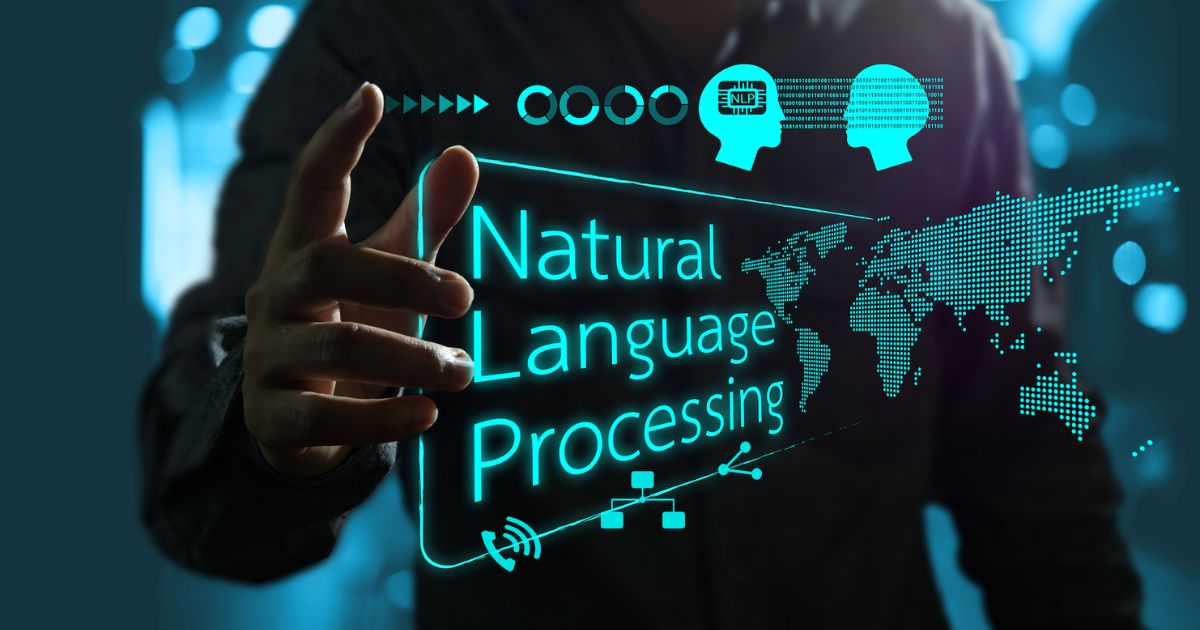
The future of Natural Language Processing (NLP) and Large Language Models (LLMs) appears increasingly promising and expansive, driven by continuous innovations and emerging trends in the field.
Emerging Trends and Technologies in NLP
- Advancements in Machine Learning Algorithms: The development of more sophisticated machine learning algorithms continues to enhance the performance of NLP systems. These advancements are improving the models’ ability to understand context, sarcasm, and subtle nuances in human language.
- Increased Focus on Multimodal NLP: Multimodal NLP integrates text with other forms of data like images and video to create more comprehensive AI systems. This integration allows for richer interpretations and interactions, expanding NLP applications in areas such as media analysis and automated content generation.
- Ethical AI and Bias Mitigation: There’s a growing emphasis on ethical AI development, particularly in designing Natural Language Processing systems that are fair and unbiased. Efforts are intensifying to identify and mitigate biases in training data and algorithms, ensuring that NLP technologies promote inclusivity and fairness.
- Expansion in Low-resource Languages: Increasing efforts are being made to develop NLP capabilities for languages that have traditionally been underrepresented in digital platforms. This trend is democratizing access to technology across diverse linguistic groups, fostering greater global communication.
Potential Future Applications of NLP
The scope of Natural Language Processing (NLP) continues to expand, suggesting exciting potential applications in the future:
- Healthcare Communication: NLP could revolutionize healthcare by improving patient interaction through automated systems that understand and respond to patient needs and language, potentially even detecting underlying conditions from speech patterns.
- Legal and Compliance Automation: Automating the review and generation of legal documents, as well as ensuring compliance with regulations through sophisticated language analysis, could become commonplace.
- Enhanced Educational Tools: Natural Language Processing can be integrated into educational software to provide real-time feedback to students, creating highly interactive and personalized learning environments.
- Advanced Public Safety Systems: NLP could be used to monitor and analyze communication on public platforms to detect threats or emergencies, improving response times and public safety measures.
The Evolving Role of AI and Machine Learning in NLP
AI and machine learning are at the core of NLP’s rapid evolution, continuously redefining its capabilities:
- Deep Learning Integration: Deeper integration of deep learning techniques is enhancing the ability of NLP systems to understand and generate human-like text, making interactions increasingly seamless.
- Automated Machine Learning (AutoML) in NLP: This involves using AI to automate the process of applying machine learning models to real-world NLP tasks, significantly speeding up the development cycle and enabling more robust solutions.
- AI Ethics in NLP: As Natural language processing technologies become more pervasive, the role of AI in ensuring ethical usage and mitigating biases in language models becomes critical. This includes developing algorithms that can detect and correct biases in training data or model outputs.
Blog Insights:
Explore the transformative world of Natural Language Processing (NLP) and its advanced subset, Large Language Models (LLMs), in our latest blog. Delve into how these technologies enhance machine understanding and generation of human language, offering innovative applications across diverse sectors like healthcare, legal, and education.
Discover the ongoing advancements and the critical role of AI in evolving NLP capabilities, aiming for more ethical, inclusive, and efficient communication technologies. Join us as we uncover the future potential and current challenges of NLP in reshaping digital interactions.
- https://www.kolena.com/blog/llm-vs-nlp-6-key-differences-and-using-them-together
- https://medium.com/@vaniukov.s/nlp-vs-llm-a-comprehensive-guide-to-understanding-key-differences-0358f6571910
- https://epi.washington.edu/news/large-language-models-outshine-traditional-natural-language-processing-methods-for-identifying-rare-circumstances/
- https://www.analyticsvidhya.com/blog/2023/03/an-introduction-to-large-language-models-llms/
In Conclusion:
In this exploration of Natural Language Processing (NLP) and Large Language Models (LLMs), we’ve uncovered their significant roles and rapid evolution within the tech landscape. From enhancing machine comprehension and language generation to promising future applications in diverse sectors, NLP stands at the forefront of technological advancement.
As these tools become increasingly integrated into daily digital interactions, their development promises greater efficiency, inclusivity, and ethical consideration. Moving forward, the continuous innovation in Natural Language Processing and AI will undoubtedly reshape our interaction with technology, making digital communication more intuitive and accessible for all.